A service proposal template that makes the next step clear
Quick answer
Explain the customer's request, the proposed service, included work, exclusions, timing, and price.
Make assumptions and customer responsibilities visible before asking for a decision.
Use a reusable outline, but check each proposal against the actual job and the business's approved terms.
Help a service business explain proposed work, exclusions, timing, price, and the customer's next decision. Includes a reusable outline and fictional example.
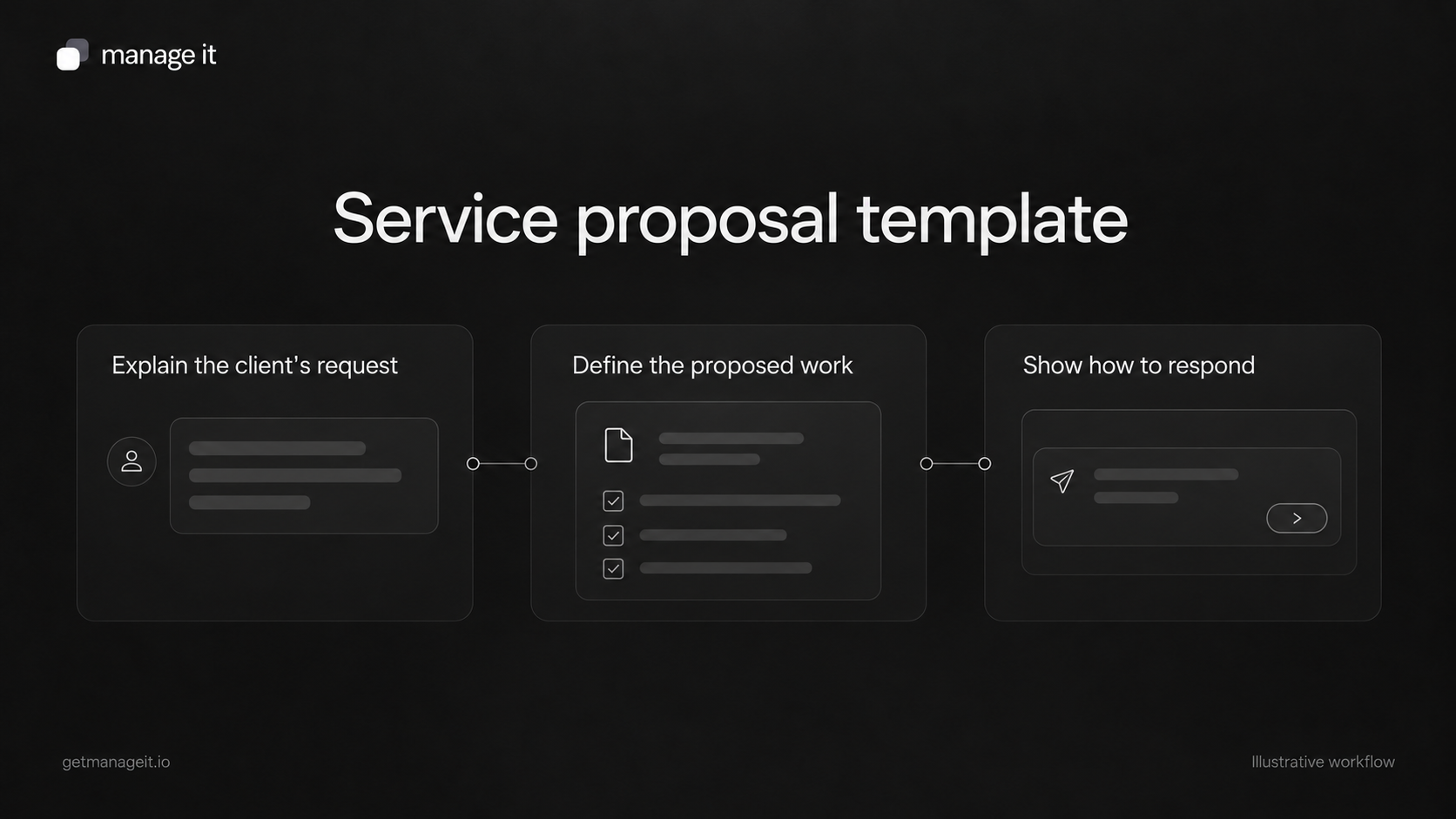
A useful service proposal lets the customer answer three questions: does this address what I asked for, what exactly am I getting, and what do I do next?
Your agency can help a local business turn scattered emails and old documents into a consistent proposal process. The starting point is clear information about the work. The layout and software should make that information easier to prepare and review.
Reusable service proposal outline
Copy the sections below and replace the prompts with details for the actual job. This is a commercial writing outline; it does not supply contractual terms or establish the appropriate legal requirements for a service.
Proposal details
Prepared for: [customer or business name]
Prepared by: [service business and contact]
Reference: [job or proposal reference]
Date: [issue date]
Offer valid until, if applicable: [actual validity date]
Your request
[Explain what the customer asked for and the relevant context in two or three sentences. Use details from the actual conversation.]
Proposed service
[Describe the work the business recommends and why it fits the request. State the intended result without guaranteeing an outcome the business cannot control.]
Included work
[Specific service or deliverable.]
[Specific service or deliverable.]
[What the customer receives when this part is complete.]
Exclusions and assumptions
[Name work the customer might reasonably expect but that is not included. Record any assumption that affects the price, timing, or feasibility.]
What we need from you
[List information, access, approvals, or preparation the customer must provide, and when. Include only what is relevant to this service.]
Timing
[Give the proposed schedule or delivery window. Identify what must happen before it can be confirmed and how a change will be handled.]
Price and payment arrangement
[Show clear line items, the actual total and currency, any optional work, and the proposed payment stages. Use the business's approved pricing and terms.]
Next step
[Explain how the customer can ask questions or take the intended approval step. Identify the person who handles the response.]
A fictional example: a studio photography session
Imagine a local photography studio preparing a proposal for a small shop. The shop needs updated product photos for its website. The following details are illustrative.
Request: Photograph eight products against a consistent plain background for the shop's online catalog.
Proposed work: One studio session with a planned shot list, followed by editing and delivery of the agreed image set.
Included: Two agreed views of each of the eight products, basic color and exposure adjustments, and delivery in the specified web format.
Excluded: Additional products, location photography, and complex compositing. Requests for those services receive a separate scope and price.
Customer preparation: Deliver the eight products and confirm the shot list before the session. Name one person who can answer questions about the products.
Timing: Confirm the session date after the products and shot list are ready. State the studio's actual delivery window in the customer proposal.
Price: Use the studio's approved line items and total. Don't estimate a real fee from this example.
Next step: Ask the customer to review the scope and contact the named studio representative about changes before completing the agreed approval step.
Notice how the sections answer practical questions. “Product photography package” by itself would not tell the customer how many products, which images, or what preparation is needed.
Check that scope and price describe the same job
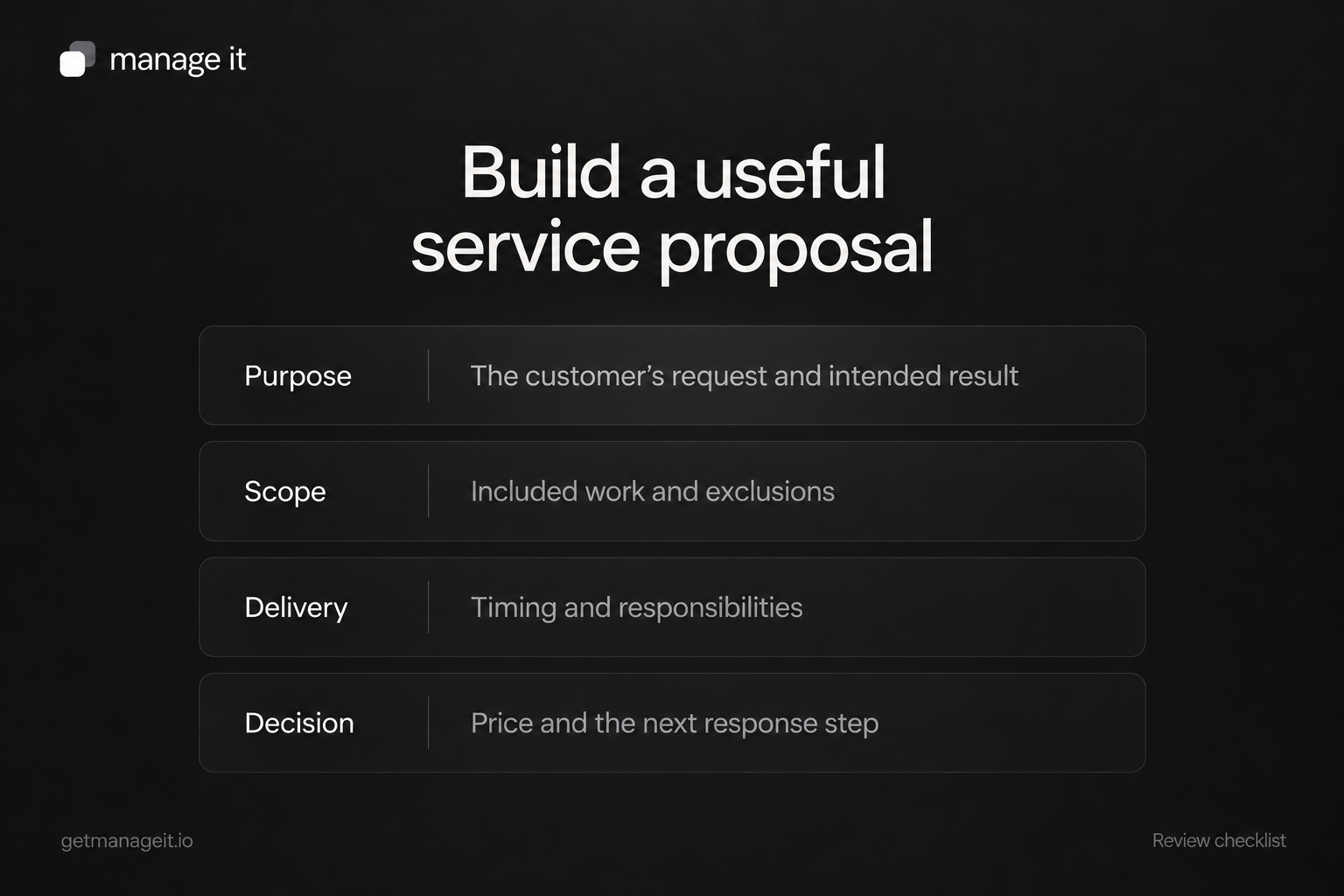
Read the narrative alongside the line items. If the description includes two visits but the pricing covers one, resolve that mismatch before sending.
Keep optional work visibly separate. A customer should be able to distinguish the recommended service from an extra they may choose. Record which options they accept before preparing the later payment request.
Asana's proposal guidance separates the reason for a project from the execution plan. For a small service job, that distinction can be brief: explain why the recommended work fits, then state exactly what happens and what the customer receives.
Build a reusable version in ManageIt
ManageIt's document template builder supports text, variables, line-item and summary blocks, signature blocks, and layout sections. A proposal template can therefore keep the business's common structure while filling each document with the actual recipient and job details.
Its line items can be grouped into sections and marked optional. Use those controls when they clarify the offer; avoid adding selectable extras simply to make the proposal look more elaborate.
If the proposal leads to an invoice, Generate Invoice provides a documented route to a draft invoice. Review the result before sending it. A reused template or generated document still needs a person to check the current scope, customer, amount, and date.
Test the customer's next step
Send a controlled proposal and open it as the intended recipient. Check the phone layout, option selection where used, and the route for questions or approval.
Have the client explain how they would handle a requested change. If the proposal sits in a linked workflow, review the signing and locking behavior before relying on later edits.
Then hand over a short preparation checklist: correct customer, current scope, matching price, realistic timing, complete responsibilities, and a clear response route. For the distinction between the offer and payment request, use the quote vs. invoice guide.