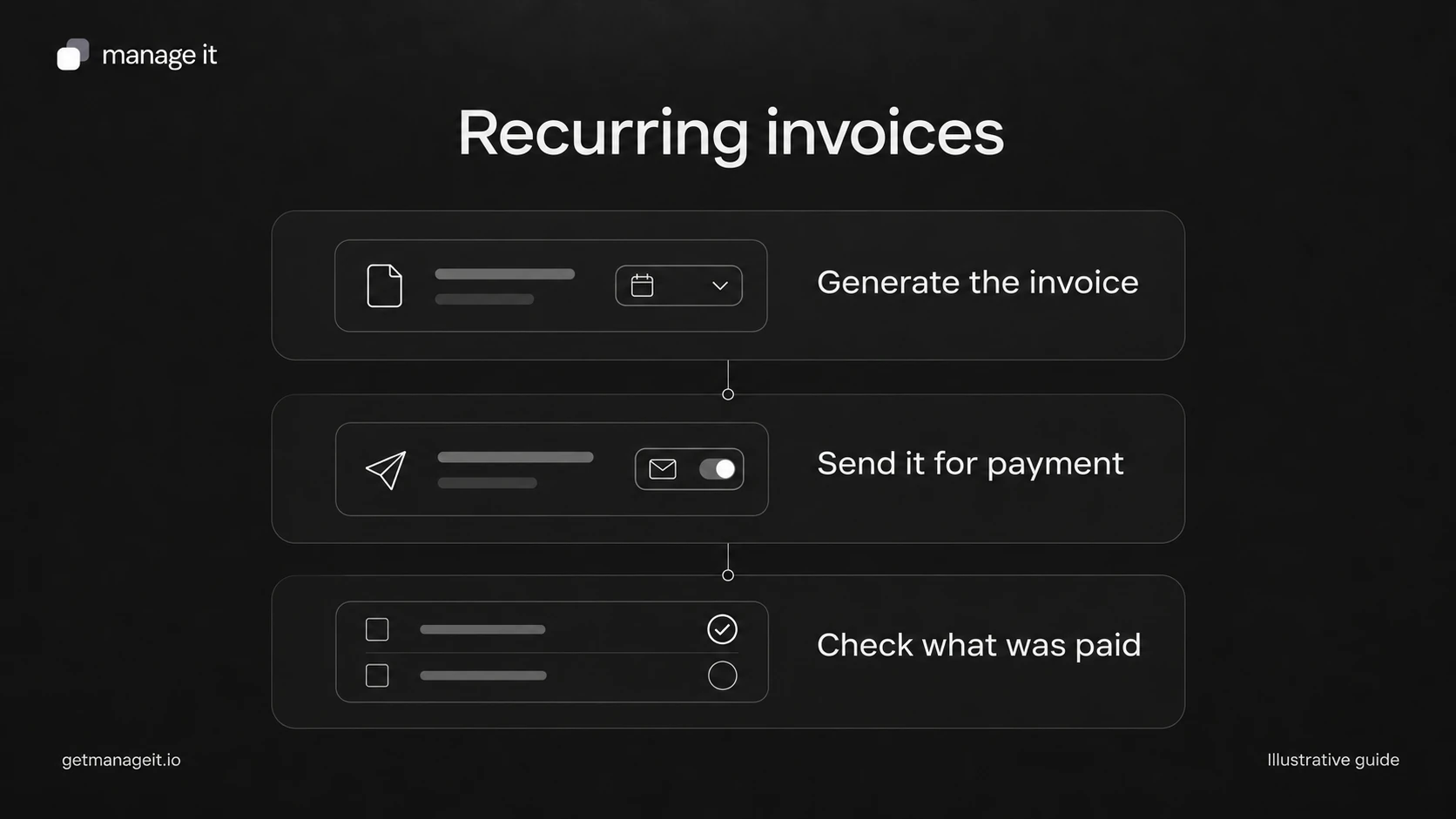
Invoice payment terms: make the due date and next step clear
Quick answer
Payment terms explain when an amount is due and how the customer should pay. State an explicit due date alongside labels such as “Net 30.”
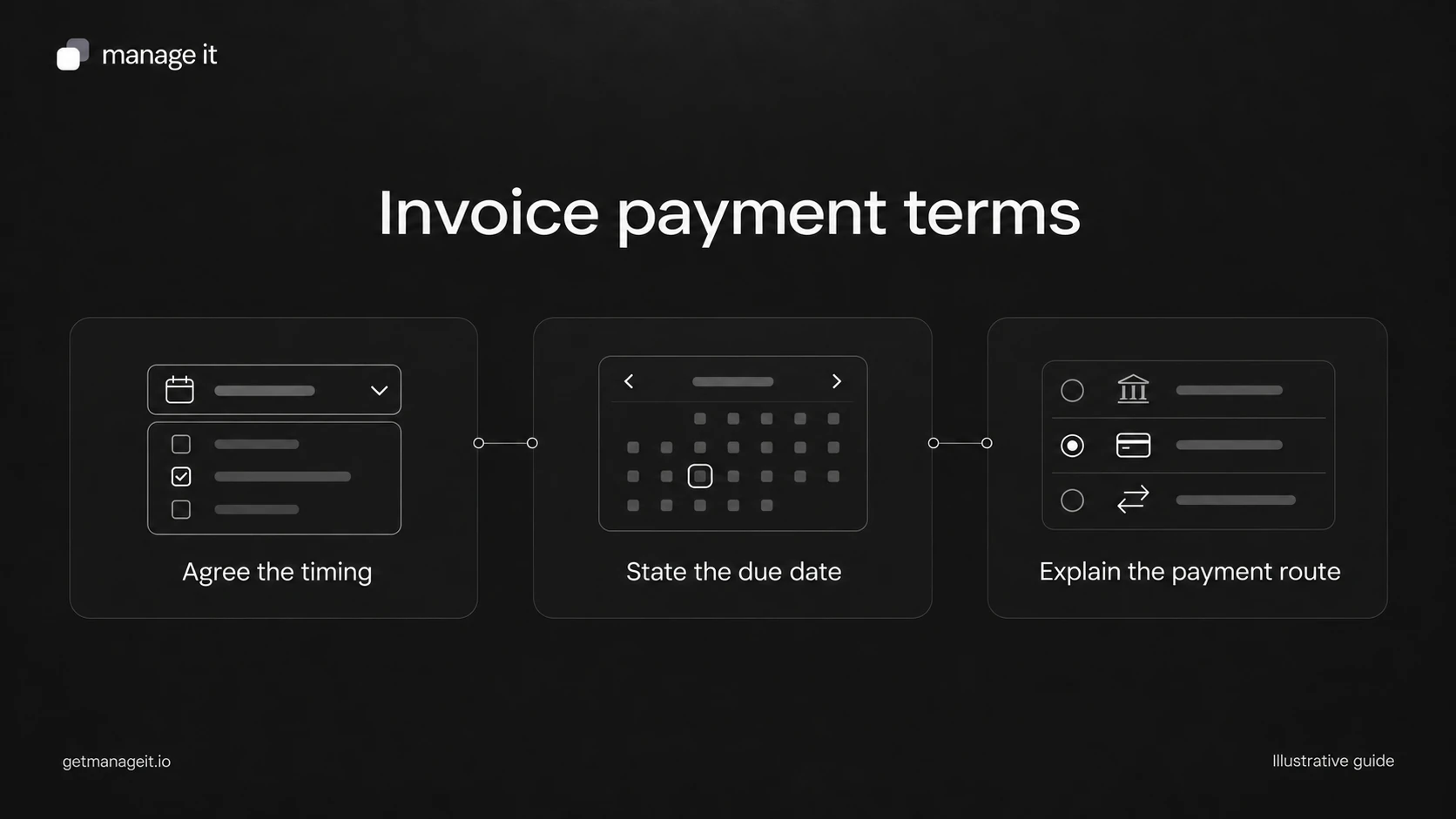
Agree the timing before the invoice arrives, and keep the invoice consistent with the quote or service agreement.
Treat late fees, interest, refund terms, and legal enforceability as separate decisions that need appropriate review for the business.
Make invoice terms understandable with explicit due dates, payment instructions, sample wording, and a process for handling exceptions.
An invoice can contain a due date and still leave the customer unsure what to do. “Net 30” may be unfamiliar. A payment link may be missing. The customer may also have agreed to a milestone payment that doesn't match the default terms on the document.
Your agency's useful contribution is to make the client's agreement, invoice, and follow-up say the same thing. Start with the actual service arrangement, then turn it into a date and action the customer can understand.
Explain the term and show the date
“Due on receipt” asks for payment when the customer receives the invoice. “Net 15” or “Net 30” commonly indicates payment within that many days of the invoice date, but the business should state the agreed starting point and show the resulting due date.
For an illustrative invoice dated March 1 with 30 calendar days to pay, the due date is March 31. Writing both the label and the date avoids asking the customer to calculate it. If the agreement uses another starting event or business days, say so and calculate accordingly.
Milestone terms need a different explanation. “Due seven calendar days after approval of the listed draft” identifies an event and interval. Staff still need to record when approval occurred and issue the correct due date.
Avoid selecting a longer or shorter period because it sounds standard. The client needs to consider the service, customer relationship, cash needs, and agreed commercial terms. There is no universal best payment period for every local business.
Include four things the customer can act on
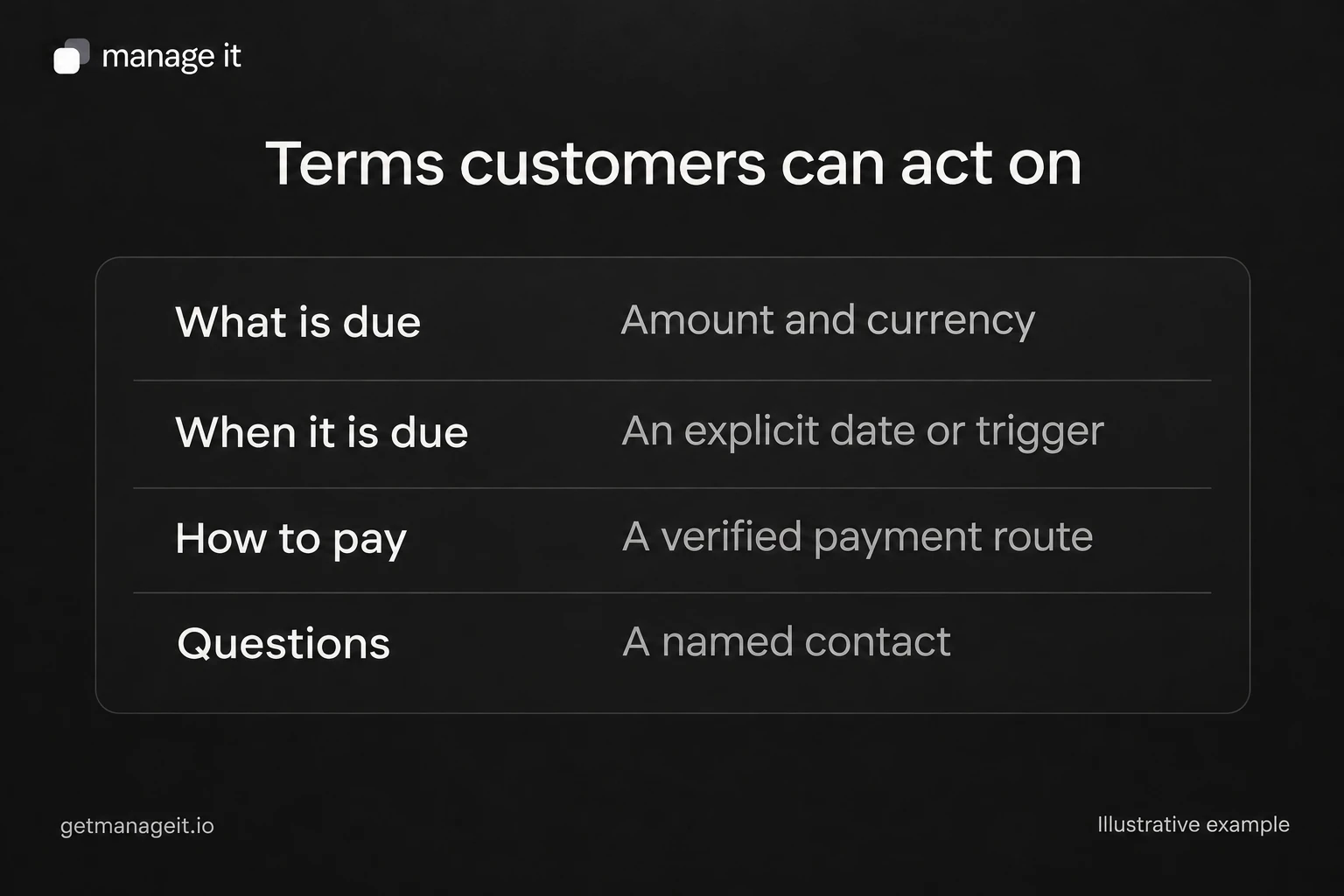
The payment section should answer:
What is due? Give the amount and currency. For a partial payment or installment, distinguish the amount due now from the full project total.
When is it due? State the actual date or clearly defined trigger. Make any relevant time zone explicit when a precise deadline matters.
How should the customer pay? Use the verified payment link or instructions for that invoice.
Who can resolve a question? Provide a monitored route to someone who can check the invoice and agreement.
Don't put essential terms only in an image. The customer should be able to read and copy the amount, date, and reference from ordinary text.
Adapt this wording to the agreement
For a fixed due date:
Payment of [amount and currency] for invoice [number] is due by [date], under the terms agreed in [quote or agreement reference]. Please pay through [verified route] and use [reference] where required. If any detail looks incorrect, contact [name or team] at [monitored route].
For a scheduled installment:
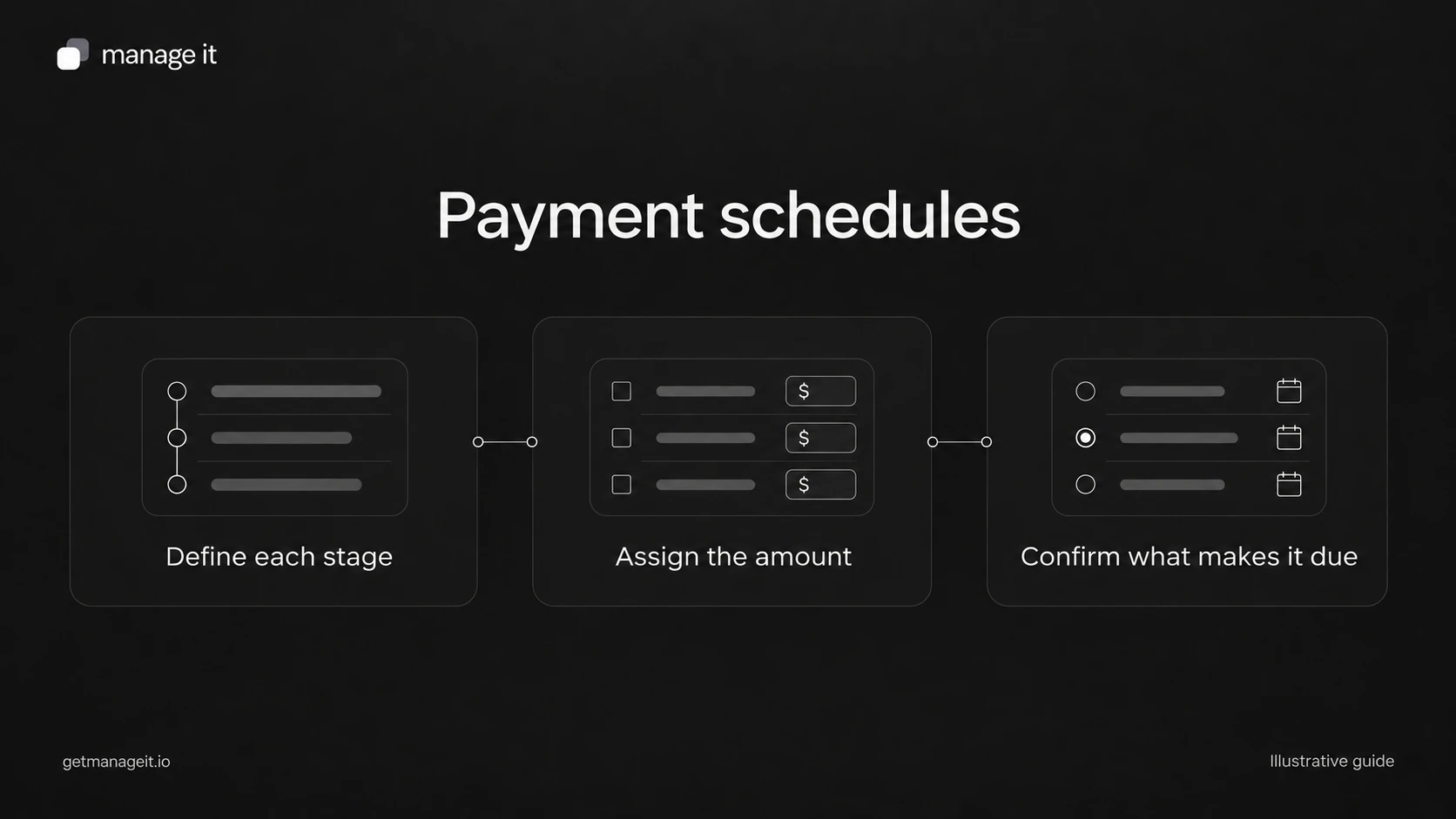
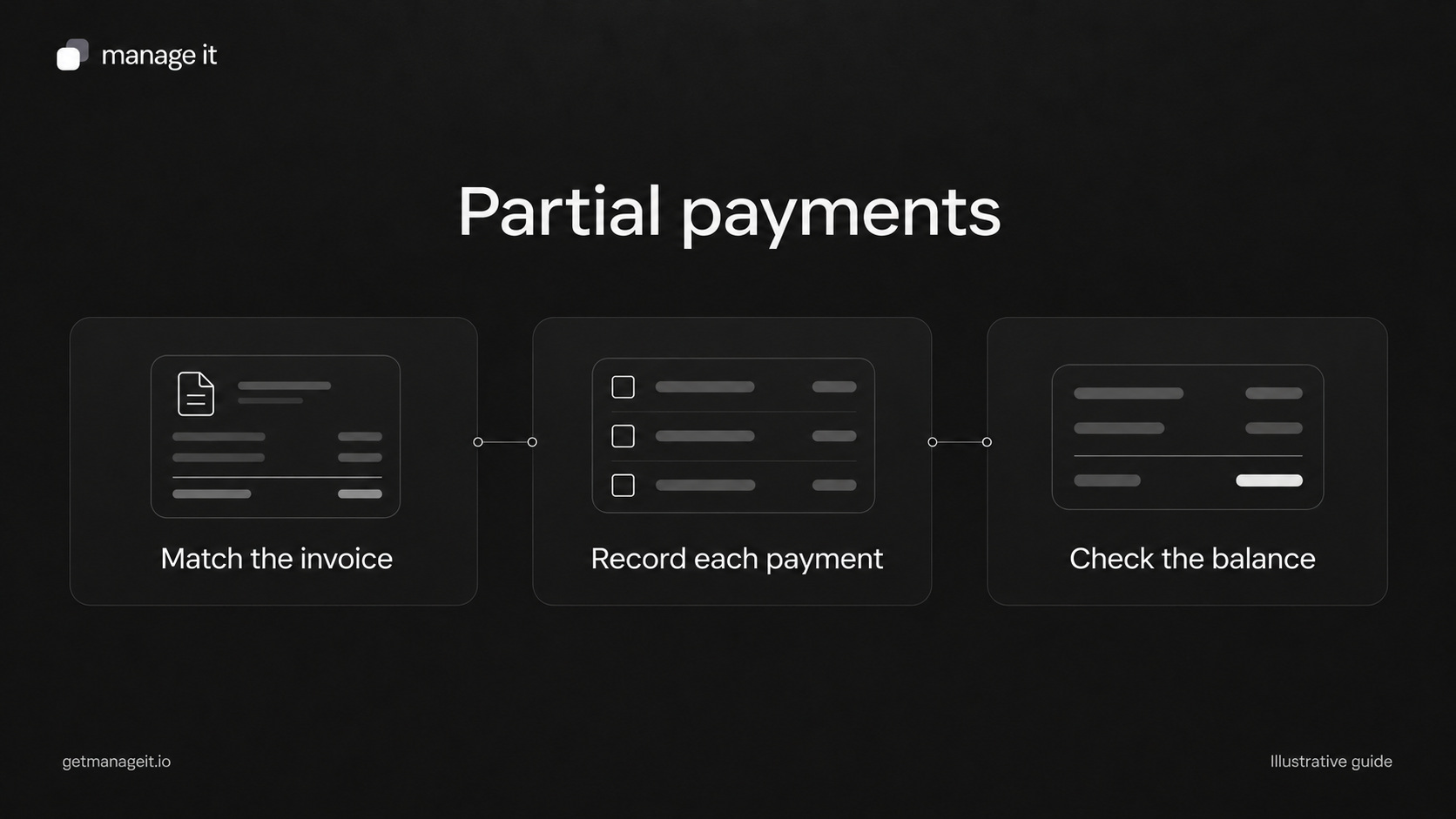
This request is for the [named installment] of [amount and currency], due on [date]. The agreed project total is [total]. Payments recorded so far total [received amount]. The remaining scheduled amount after this installment will be [amount], subject to any separately agreed changes.
Check every amount against the current records. The second example describes what will remain after payment; it must not be presented as confirmation that the current installment has already been received. See the payment schedule template for the planning fields behind that message.
Match the invoice to the client's setup
ManageIt's document creation guide describes due-on-receipt terms, preset Net terms, and manually selected due dates, with payment instructions handled separately. Its release notes describe overdue timing following the business time zone.
Check those settings with the client rather than relying on the default. Preview a real service example and compare it with the accepted quote. If the date differs, correct the cause before sending.
Reminders are another separate setting. Stripe's customer email documentation, for example, distinguishes finalized-invoice emails, unpaid reminders, failed-payment notifications, and receipts. Each message belongs to a different event. A reminder should use the current balance and status, not simply repeat the original invoice amount.
Agree how staff handle exceptions
Give staff a route for disputed amounts, promised payments, pending transfers, and approved extensions. Record any revised due date and who approved it, then review the messages that would otherwise be sent.
Don't add an arbitrary late fee or interest clause from a generic template. The business needs terms appropriate to its customers, jurisdiction, and agreement, reviewed by a qualified adviser where necessary.
Use the invoice and payment administration kit to record the client's standard terms and exception owner. Then check one invoice from the customer's perspective: the amount, due date, and payment action should be easy to find without asking the business to explain its own document.
The editable worksheets and templates include Markdown and CSV files you can adapt with the client.