Estimate vs. quote: explain what the customer is agreeing to
Quick answer
An estimate gives an approximate price based on what is known. A quote specifies a price for defined work and stated conditions.
Explain assumptions, exclusions, validity, and the next approval step in either document. The title alone doesn't determine its legal effect.
When new information changes the work, show what changed and ask for the appropriate decision before treating the revised scope as agreed.
Explain approximate pricing and defined quotes, record assumptions and exclusions, and help customers understand what decision comes next.
A customer asks a landscaping business what a job will cost. The business has photos but hasn't measured the site. Giving an approximate range may be useful at that stage. Sending a fixed-looking document without explaining those unknowns can create a different expectation.
When you help a client set up its documents, begin with what staff know and what decision they want the customer to make. Is the customer deciding whether to arrange an assessment, or approving specific work at a stated price?
Make the price basis explicit
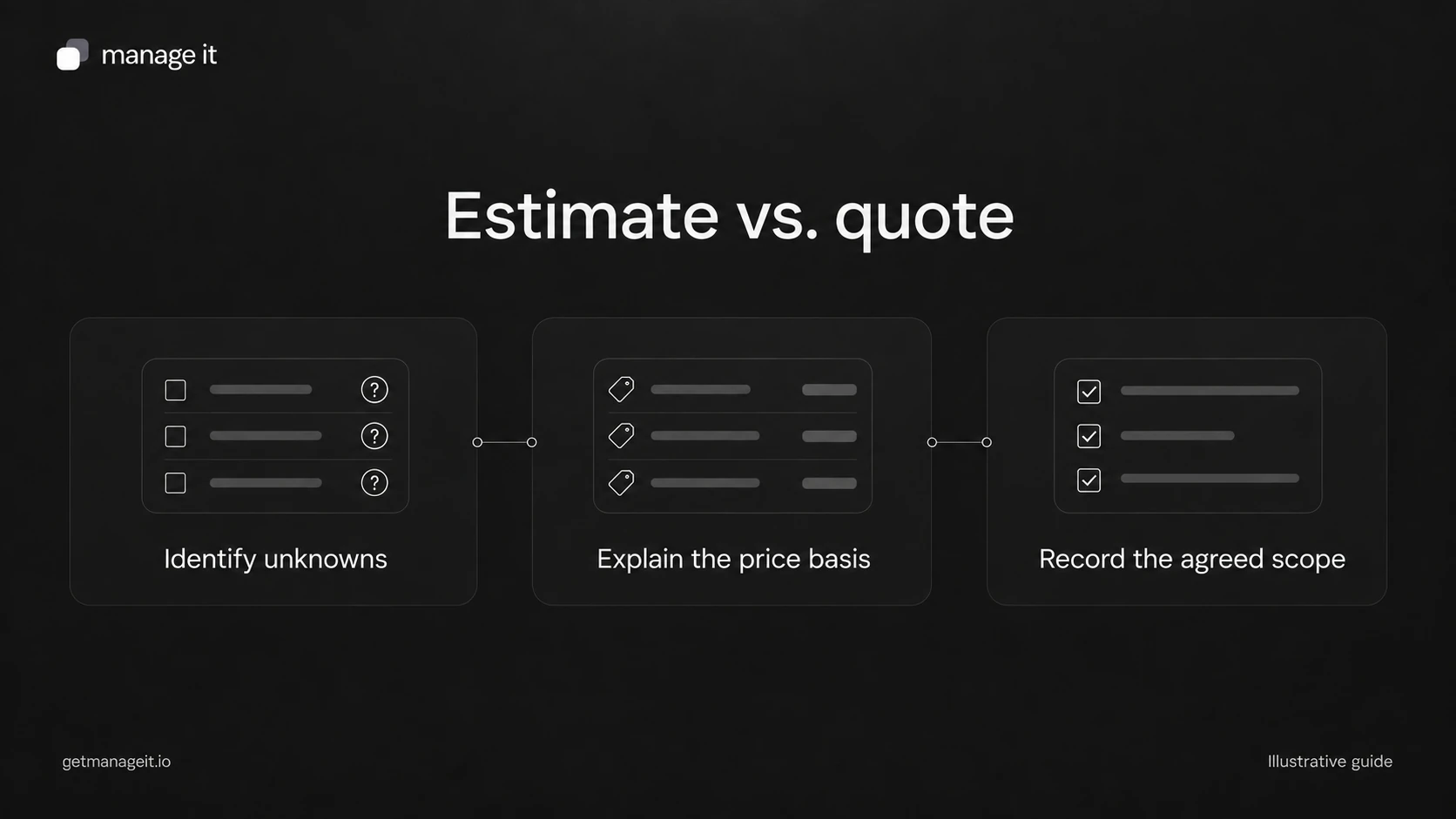
For an estimate, describe the information available and the assumptions behind the amount. If it is a range, explain what determines where the final price lands. Name the next step needed to make the work and price more definite.
For a quote, identify the work included, the stated price, and any conditions or options. Tell the customer how long the quote is available for acceptance and what happens if they request different work.
New Zealand's official quotes and estimates guidance uses the operational distinction between approximate cost and specified work at a specified price. Its legal rules are specific to New Zealand; don't apply them to a US client's agreement. Have the business's adviser review the terms that govern its actual services.
Show how an estimate becomes a quote
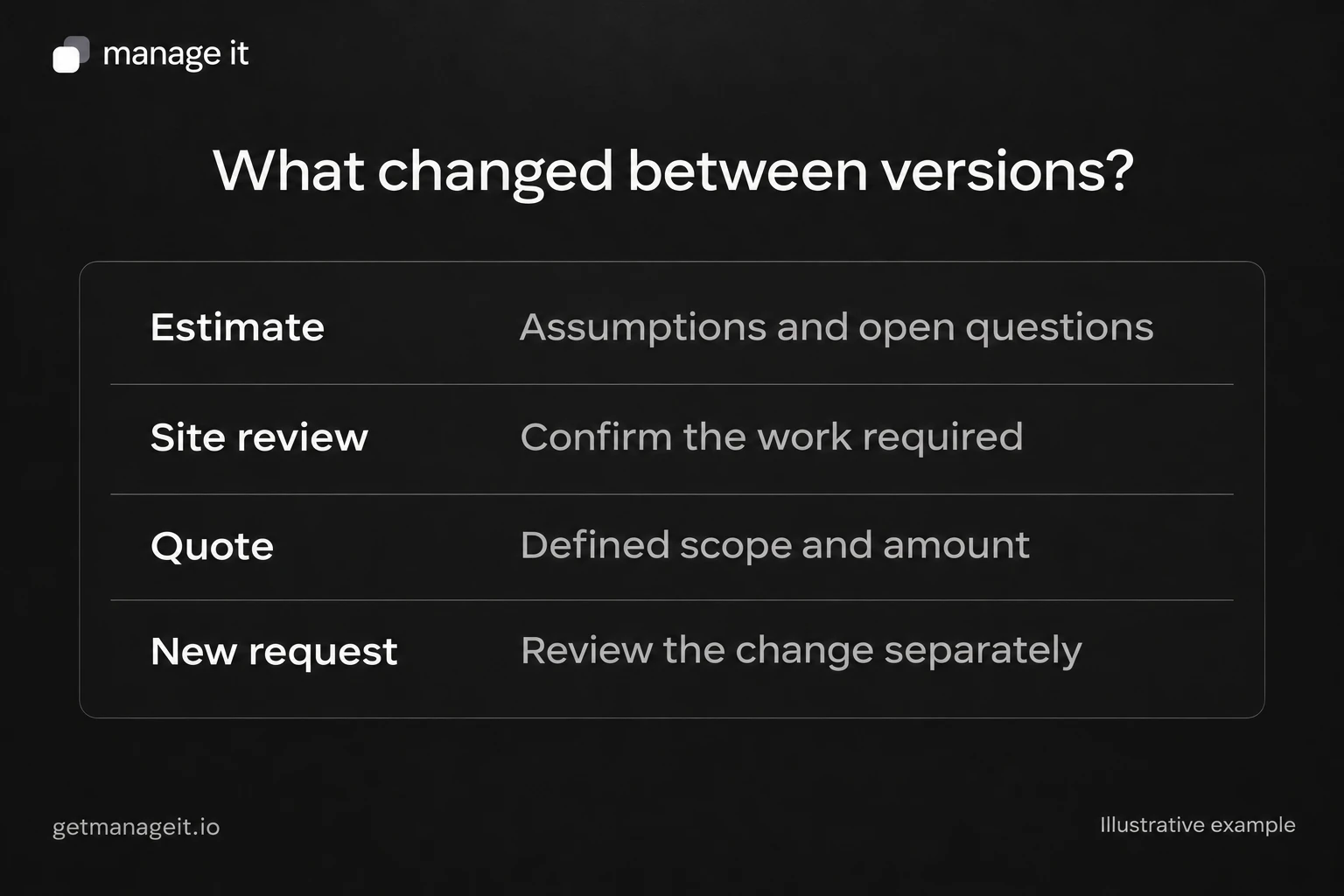
Consider an illustrative painting inquiry. The customer requests two rooms and provides photos. The business still needs to check dimensions, wall condition, access, and which surfaces are included.
An initial estimate might say:
Based on the photos and room descriptions supplied, the estimated price is [range and currency]. This assumes [specific assumptions]. We need to inspect [open questions] before providing a quote for the agreed work. The estimate excludes [named exclusions].
After the site review, the quote might specify the two rooms, preparation work, paint specification, number of coats, included surfaces, access arrangements, total, and service timing. It should also say whether taxes and additional charges are included.
If the customer then asks for the hallway, that is another scope decision. Update the proposal or prepare a separate change record according to the client's process. Don't quietly replace the agreed document and expect everyone to remember the original.
Use this decision sheet with the client
Before staff send either document, ask:
What does the customer need to decide now?
Which details are confirmed, and which are assumptions?
What work, quantity, location, or deliverable is included?
What is specifically excluded?
Is the price approximate, fixed for the defined scope, or calculated using a stated method?
What dates, validity limits, and customer dependencies apply?
How can the customer accept, ask a question, or request a change?
If staff cannot explain the difference between an assumption and an inclusion, the document needs another review. Asana's scope guidance is useful for framing the boundaries: goals, deliverables, timing, and work outside the project all contribute to a usable scope.
Use the right document controls in ManageIt
ManageIt includes a Quote document type with validity dates and line items. Its line-item guide describes optional quote items that can carry into an invoice when selected. Separate the base service from genuine options so the customer can understand the total they are choosing.
“Estimate” isn't a documented native document type. Don't assume changing a label creates a distinct estimate workflow. If the client needs an approximate-price document, review how its wording, approval controls, and later quote will work before choosing the implementation.
An accepted quote also isn't the same as an invoice. The quote vs. invoice guide explains the later payment request. Keep that handoff tied to the accepted scope and any recorded changes.
Download the scope and document control kit to capture assumptions, exclusions, and approval references. Complete it for one service with the client, then use it to review the documents customers will actually receive.
The editable worksheets and templates include Markdown and CSV files you can adapt with the client.